
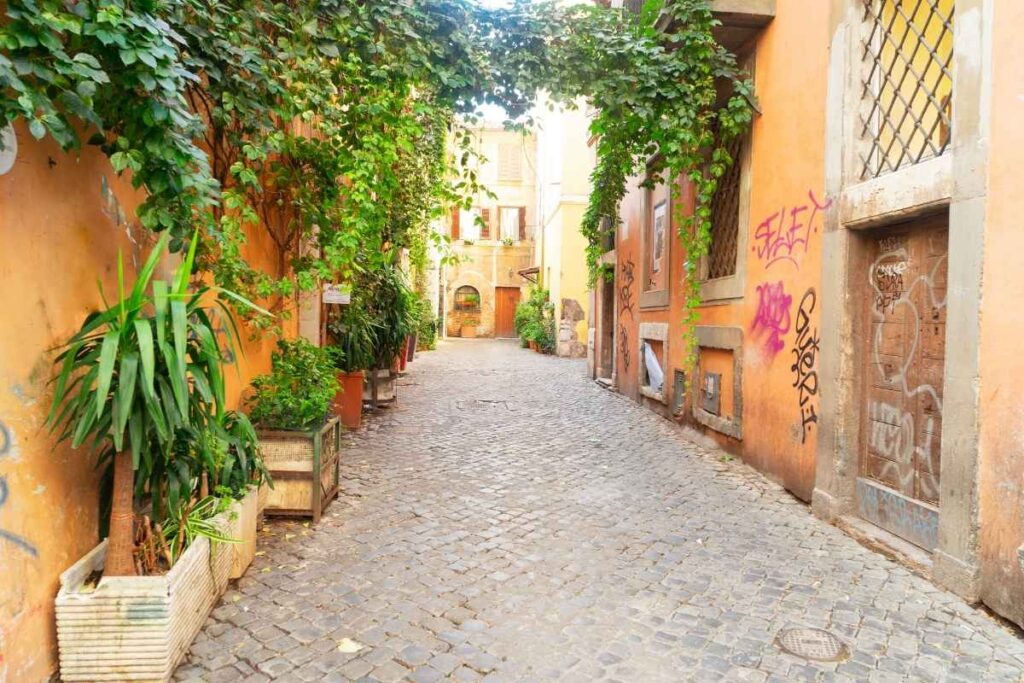
There is a part of Rome where the narrow cobblestone streets don’t lead to monuments surrounded by tour buses, where the buildings are painted in faded ochre and terracotta, and where laundry still hangs between windows above alleyways that haven’t been widened since the Middle Ages. This is Trastevere, the 13th rione of Rome, and spending time here feels less like sightseeing and more like stepping into the daily rhythm of a city that has been living this way for over two thousand years.

I always tell travelers the same thing: Rome’s historic center gives you the spectacle, but Trastevere gives you the texture. The cobblestones underfoot, the vine-covered facades, the sound of conversation spilling out of a trattoria at ten o’clock on a Tuesday night. It is the Rome that Romans themselves fell in love with.
A Neighborhood Built on the Other Side
The name Trastevere comes from the Latin trans Tiberim, meaning “beyond the Tiber.” And that geographical detail, being on the opposite bank of the river from the ancient city center, shaped everything about how this neighborhood developed.
In Rome’s earliest centuries, this western bank of the Tiber belonged to the Etruscans, and the Romans called it Ripa Etrusca. The only connection to the main city was a small wooden bridge called the Pons Sublicius. As Rome’s commercial activity grew during the Republic, sailors, fishermen, and foreign traders settled here, drawn by the river and the relative affordability of land that sat outside the city proper.
By the time of Emperor Augustus, who divided Rome into 14 administrative regions around 7 BC, Trastevere had become the 14th, officially part of the city but culturally distinct. Immigrants from the eastern Mediterranean, particularly Jewish and Syrian communities, established deep roots here. Trastevere was home to one of the oldest Jewish settlements in Europe, with a synagogue dating to the 11th century, before the community was forcibly relocated to the Ghetto across the river in the 16th century.
During the Imperial period, wealthy Romans built garden villas on the slopes above the neighborhood. Julius Caesar himself had a villa here, the Horti Caesaris. But at street level, Trastevere remained a working-class quarter of warehouses, workshops, and tightly packed residential buildings. When the Goths sacked Rome in the 5th century and destroyed the bridges connecting Trastevere to the rest of the city, the neighborhood was effectively cut off for centuries, developing in isolation and forging the fierce local identity the Trasteverini are still known for.
That identity survives most visibly in the Festa de’ Noantri, or “Feast of We Others,” held every July. The name says everything: the people of Trastevere have always considered themselves a community apart, with their own dialect, their own traditions, and their own way of being Roman.
What to See in Trastevere and Its Surroundings
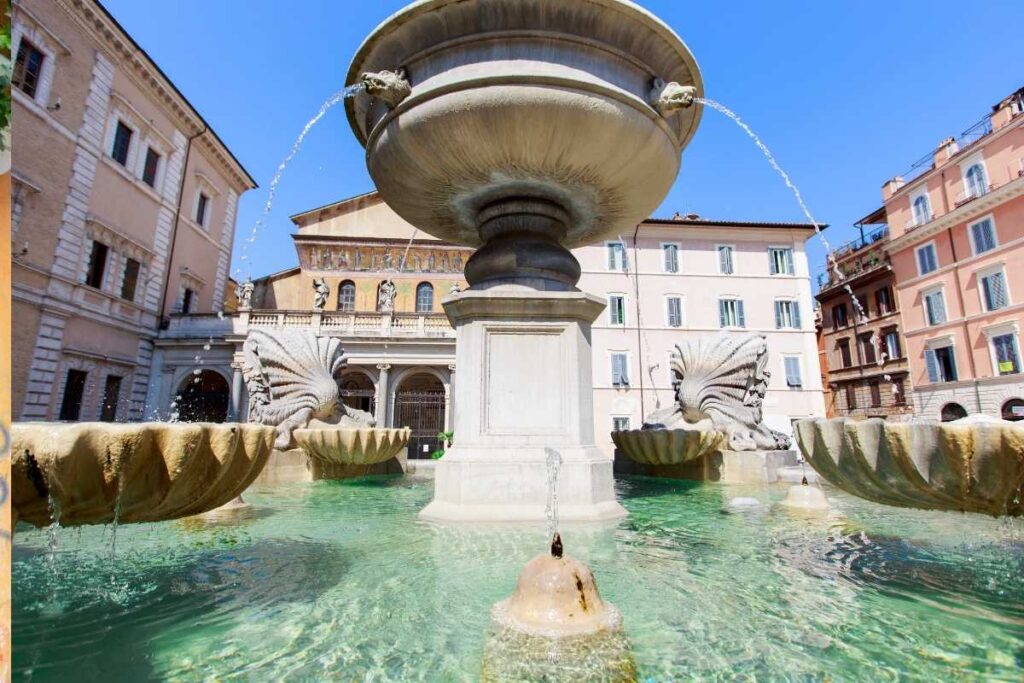
The main piazza, Piazza Santa Maria in Trastevere, is the neighborhood’s living room. Romans and visitors sit around the central fountain in the evenings, street musicians play, and the facade of the Basilica di Santa Maria in Trastevere glows gold under the lights. The 13th-century mosaics by Pietro Cavallini that decorate the apse are among the finest examples of medieval art in the city. Inside, 22 ancient columns salvaged from the Baths of Caracalla support the nave, a quiet reminder that this neighborhood has been recycling Roman ruins since before the concept had a name.
A short walk south brings you to the Basilica di Santa Cecilia in Trastevere, dedicated to the patron saint of music, who according to tradition was martyred on this site. Beneath the church, you can descend into a 2nd-century BC Roman dwelling, one of the rare places in the city where the ancient domestic world sits directly beneath a functioning church. The church also contains Stefano Maderno’s striking Baroque sculpture of Saint Cecilia and Pietro Cavallini’s frescoes of the Last Judgment in the adjacent convent, which are only visible at limited hours.
Villa Farnesina, on the northern edge of Trastevere along Via della Lungara, is a Renaissance gem that many visitors miss entirely. Commissioned in the early 16th century by Agostino Chigi, the papal banker, and designed by Baldassarre Peruzzi, the villa contains frescoes by Raphael, including the celebrated cycle of Cupid and Psyche. Across the street, Palazzo Corsini houses a section of Italy’s national art collection, with works by Caravaggio, Rubens, and Guido Reni.

Behind Palazzo Corsini, the Orto Botanico (Botanical Garden of Rome) occupies a terraced hillside that once belonged to the Corsini family. Managed by La Sapienza University, the garden shelters over 3,000 plant species, including a Japanese garden, a bamboo grove, and a sensory garden designed for visually impaired visitors. It’s one of the quietest spots in central Rome.
For the best panoramic view of the city, climb the Gianicolo Hill (Janiculum Hill) from Trastevere’s western edge. The hilltop terrace offers a sweeping vista of Rome’s skyline, from the dome of St. Peter’s Basilica to the Vittoriano and beyond. Timing this walk for sunset turns it into one of the most memorable moments of any Roman itinerary.
Across the river, the Jewish Ghetto and the ruins of the Largo di Torre Argentina (where Julius Caesar was assassinated) are within a ten-minute walk. Isola Tiberina, the small island in the Tiber connected to Trastevere by the ancient Ponte Cestio, makes a pleasant stop along the way.
For visitors who want to go deeper into the layers of the neighborhood, a guided walking tour through Trastevere’s backstreets and hidden piazzas is one of the best ways to uncover stories that even guidebooks tend to miss.
Eating in Trastevere
If there’s one thing Trastevere does exceptionally well, it’s feeding people. The neighborhood has been a center of Roman cucina popolare for centuries, and the local trattorias still serve the dishes that define the Roman table.

Cacio e pepe, carbonara, amatriciana, gricia: these four pasta preparations, built on pecorino romano, guanciale, black pepper, and simple technique, originated in the kitchens of Lazio and found their spiritual home in neighborhoods like Trastevere. Da Enzo al 29, a tiny trattoria on Via dei Vascellari, has become one of the most sought-after tables in the city for exactly this kind of cooking. Lines form early, and reservations are strongly recommended.
For pizza, Pizzeria ai Marmi on Viale Trastevere (locals call it “l’obitorio,” the morgue, because of its marble-slab tables) serves thin, crispy Roman-style pizza that has drawn crowds for decades. Suppli, the Roman fried rice balls filled with mozzarella and tomato sauce, are practically mandatory before the main course.
Antica Caciara Trasteverina, a century-old deli near Piazza di San Cosimato, is the kind of shop that makes you understand why Italian food culture is so fiercely local. The house-aged pecorino and ricotta come from small producers in the surrounding Lazio countryside, and the owners will walk you through every option with genuine enthusiasm.

For travelers who want to understand Roman cuisine rather than simply eat it, a food tour through Trastevere connects the dots between the history of the neighborhood and what ends up on the plate. And for those who want to go even further, cooking classes run by local chefs in Trastevere offer the chance to learn how to make fresh pasta, classic Roman sauces, and seasonal dishes using the techniques and ingredients that define this particular corner of Italian cooking.
The aperitivo culture here deserves its own mention. Freni e Frizioni, a converted mechanic’s garage on Via del Politeama, has become one of Rome’s most popular spots for early-evening drinks and buffet snacks. Bar San Calisto, on the piazza of the same name, has been serving cheap wine and excellent chocolate gelato for over fifty years and remains one of the most authentically local bars in the city.
I strongly recommend to book a Trastevere food tour
Porta Portese and the Market Tradition

Every Sunday morning, Trastevere hosts the Porta Portese flea market, one of the largest open-air markets in Europe. Starting at the old Porta Portese gate and stretching south along the river, the market sells everything from vintage clothing and mid-century furniture to old records, antique jewelry, and household goods. It’s chaotic, crowded, and wonderful.
During the week, the smaller Mercato di Piazza San Cosimato serves as the neighborhood’s daily food market, with stalls selling fresh produce, cured meats, cheeses, and seasonal ingredients that supply Trastevere’s restaurants and home kitchens alike.
Practical Notes
Trastevere is best explored on foot. Tram line 8 connects Piazza Venezia to the neighborhood, and the area is walkable from the historic center in about 15 minutes, crossing the Tiber at Ponte Sisto or Ponte Garibaldi. Accommodation ranges from boutique hotels to vacation rentals in converted medieval buildings.
The best time to experience Trastevere is in the evening, when the piazzas fill up and the neighborhood comes alive in that unhurried, generous way that only Roman neighborhoods seem to manage.
